Leo Triplet
25 Feb 2025Well, it’s galaxy season again and my equipment is tuned for large nebulas so images for the next while are going to consist of small blobs in the middle of a lot of black. Here’s the first one.
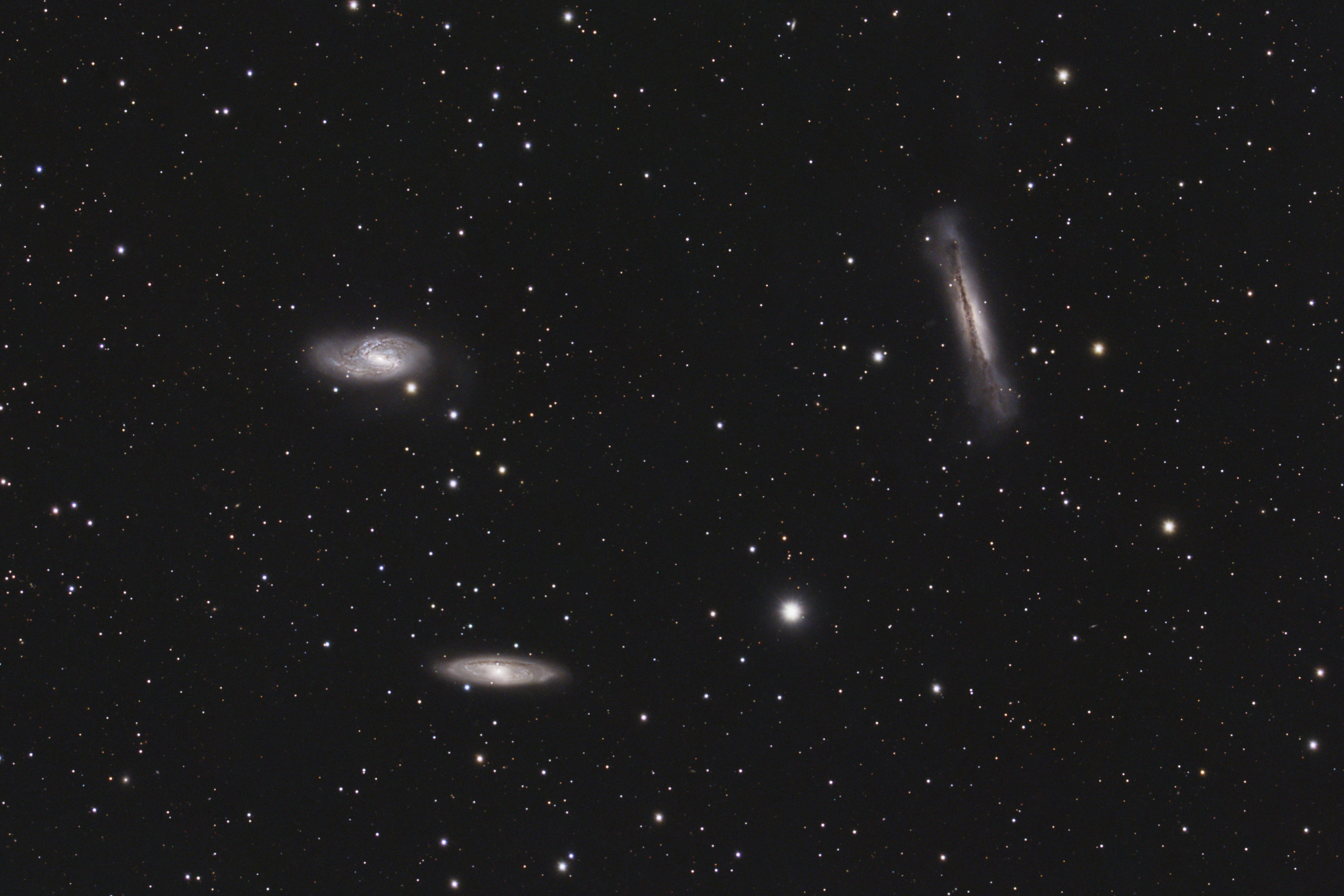
Well, it’s galaxy season again and my equipment is tuned for large nebulas so images for the next while are going to consist of small blobs in the middle of a lot of black. Here’s the first one.
I had a few clear nights with little moon so I thought I’d try the Horsehead Nebula again. I was proud of what I achieve last time but I thought I could do better now with better equipment and lots more experience. This time, I spent longer on RGB integration and less time on narrowband and only used the Ha part, discarding the OIII. Anyway, I’m pleased with the result. Perhaps I could spend longer on it to clean it up a little, but I’m happy for now. There’s not long left before the Milky Way disappears for a while and all I’ll have are galaxies, so I’d like to make the most of it.
I’ve sat on this image for a while now. I was never happy with the framing or the processing. I’ve got it to a state where I’m reasonably happy with it, so here it is.
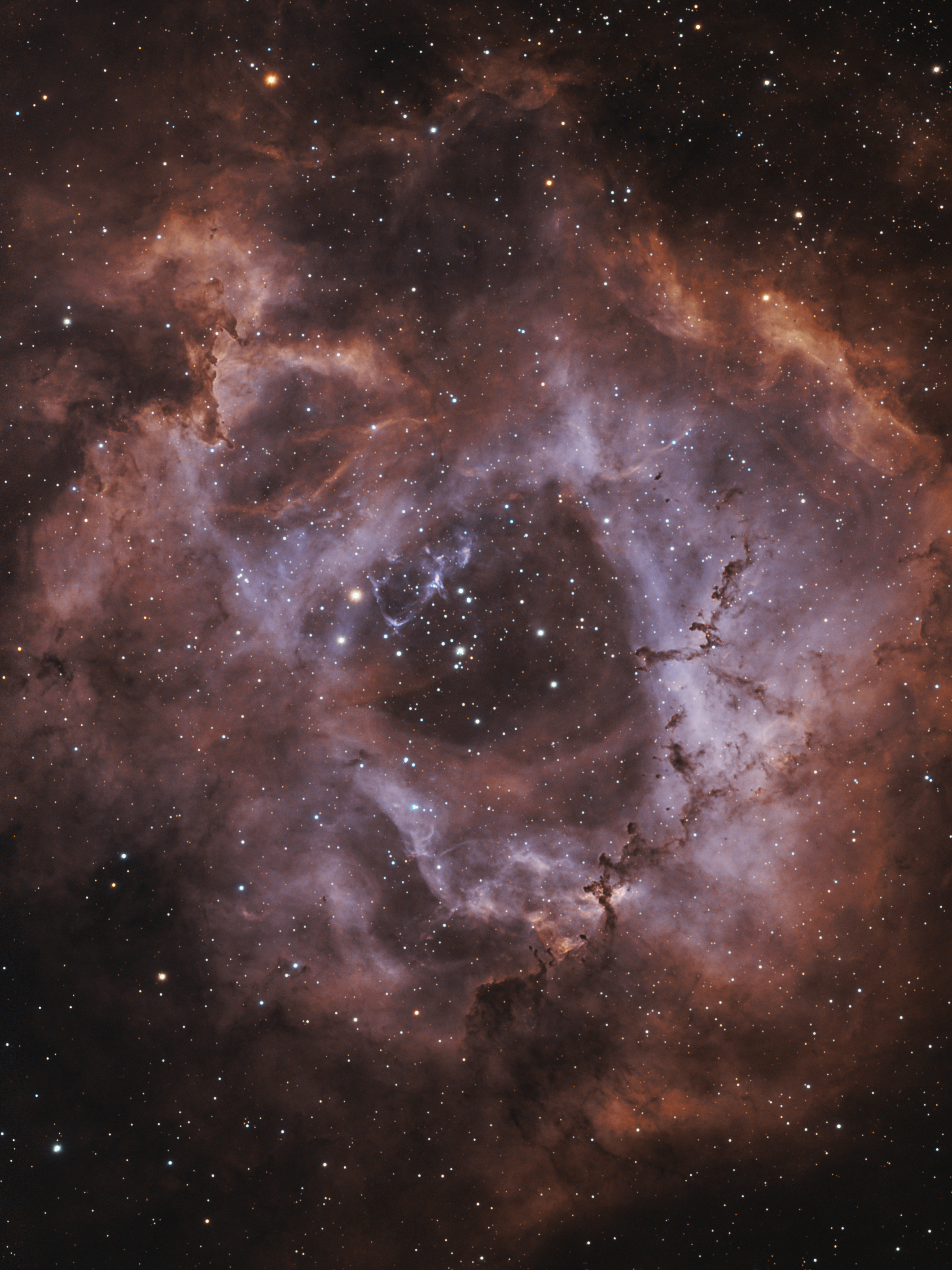
This is the Jellyfish Nebula. It’s a beautiful but rather faint nebula in Gemini. This one took me a while to image because of cloud and moon. I feel like this deserves more but I’m reasonably happy with it for now.
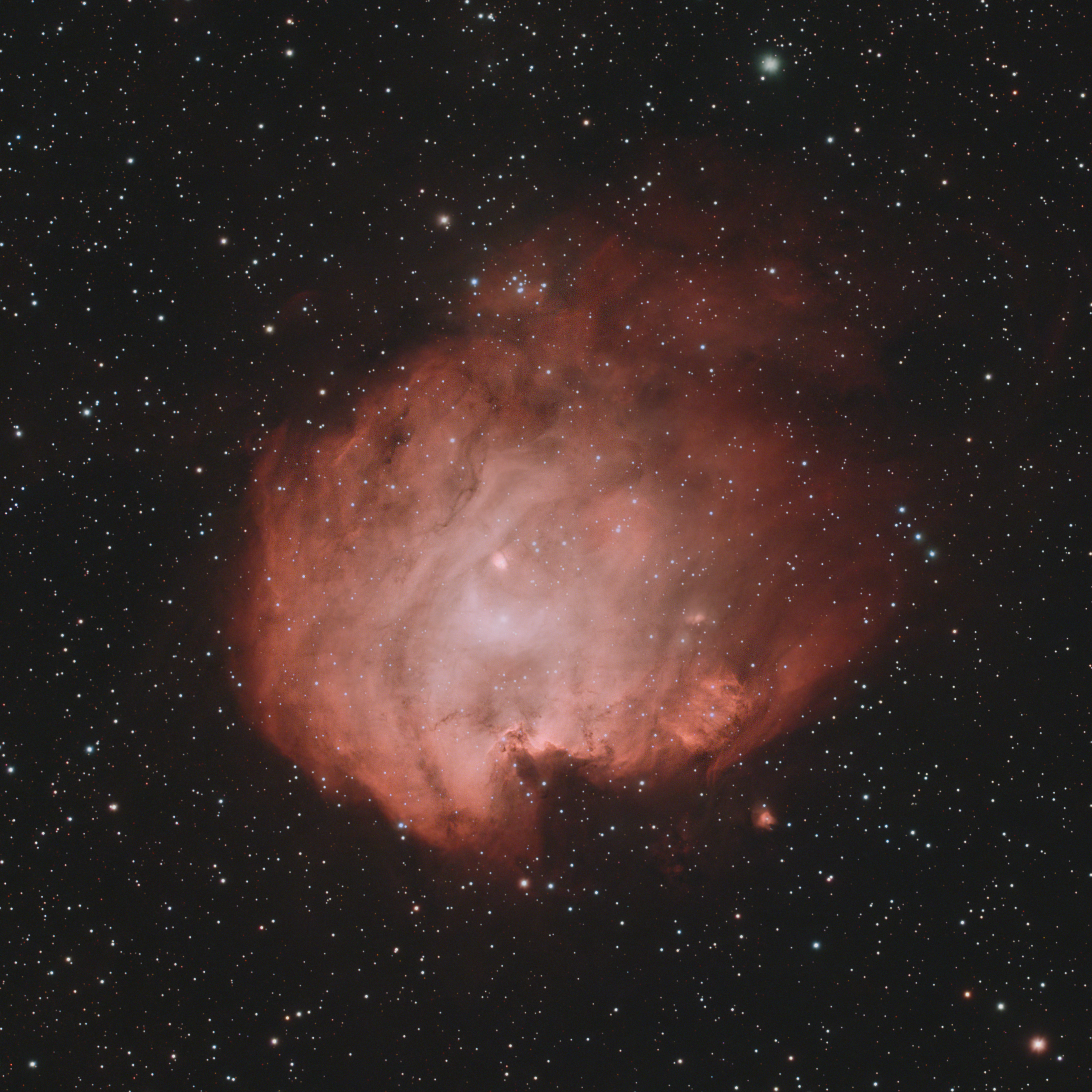
This is the Monkey Head Nebula. I’ve done this one in the past and never made a good job of it so I decided it was time to revisit on a rare clear night here in UK. The sky was reasonably dark and I managed to gather some nice data. I also experimented with a new technique where I combined a wavelet enhanced nebula core using a transprency mask in Gimp. It let me get some nice detail in the core without increasing noise elsewhere in the image. I’m reasonably happy with this one for now.